Depop · BTG Product Management Academy
Depop Pop-Ups
A product strategy pitch for Depop: bring the in-person thrifting experience into the app through physical pop-ups, using an existing partnership, with all transactions staying on-platform.

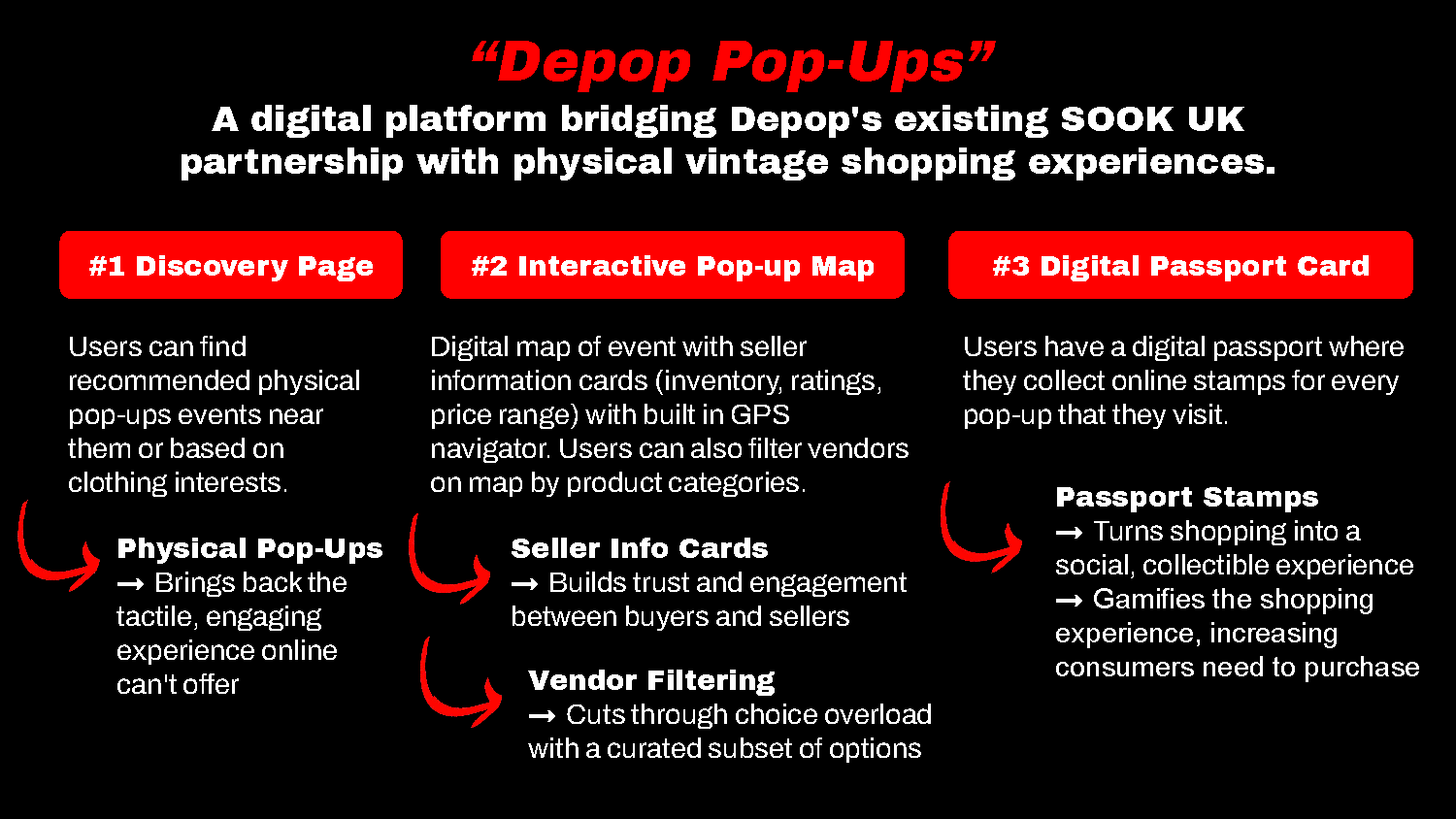
Half of U.S. consumers still prefer to buy secondhand in person. The feeling of the fabric, the unexpected find, the social experience of going with a friend — none of that exists in an infinite scroll. Depop already had an asset that pointed at a solution: a partnership with SOOK UK, which runs physical vintage markets. The connection between that partnership and the Depop app wasn't built. We built it.
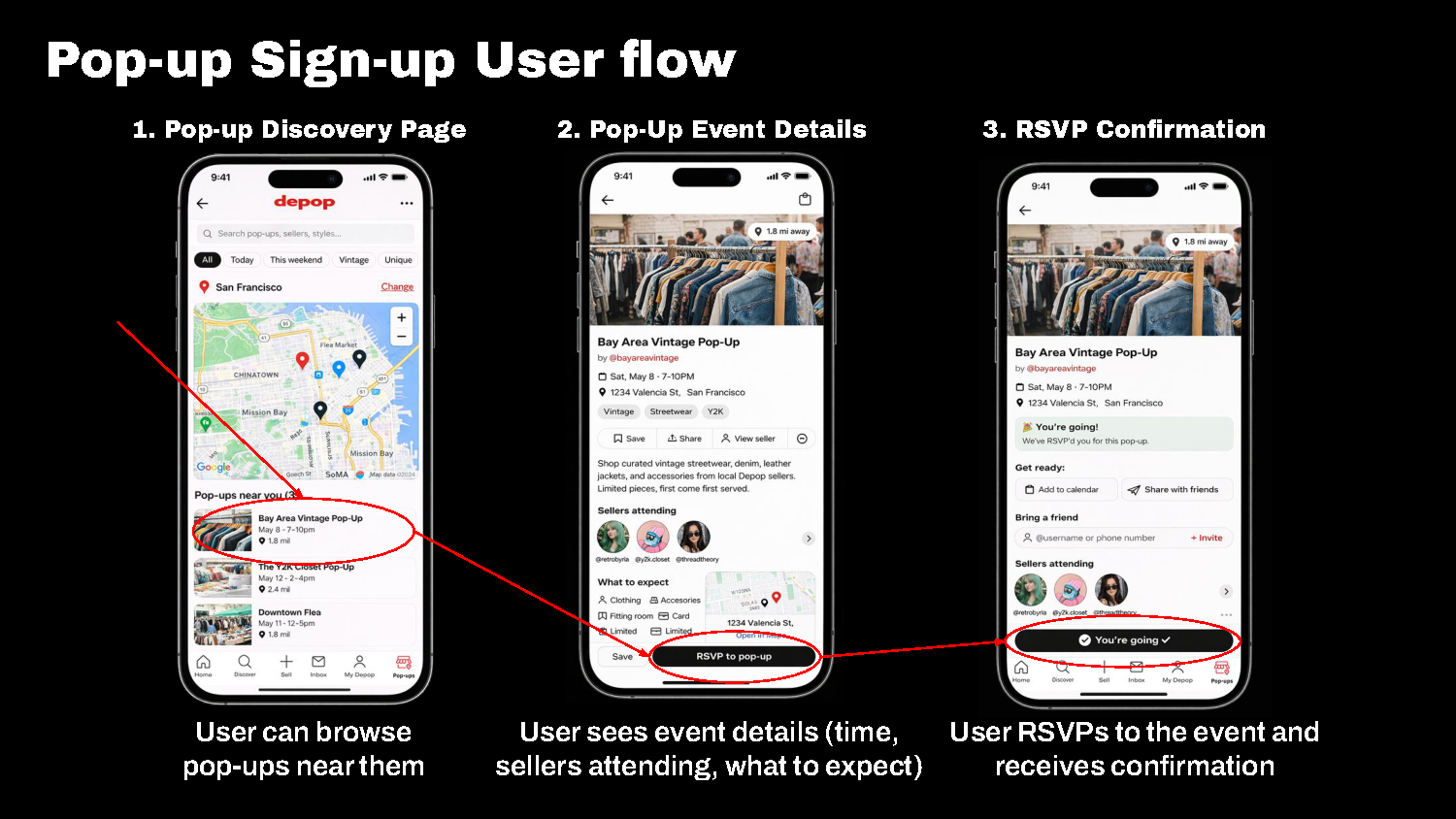
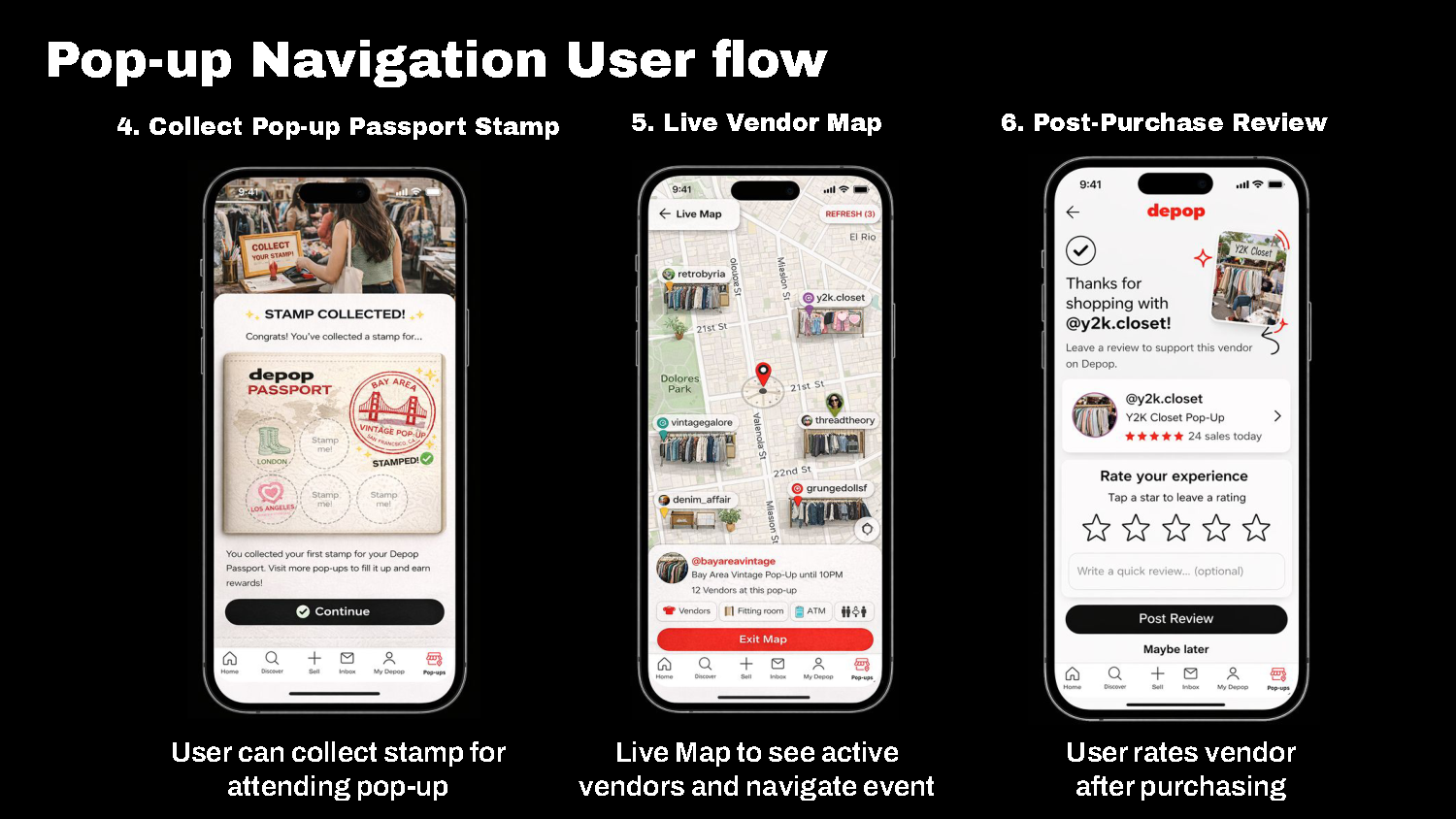
Depop Pop-Ups adds three things to the app. A discovery page surfaces nearby pop-up events matched to your clothing interests, so you find out about a market the same way you find a listing. An interactive map shows the event live, with vendor information cards, inventory, ratings, and price range, navigable by GPS. A digital passport collects a stamp for every pop-up attended, turning a one-time visit into something social and collectible.
My role was the app mockups, the trade-offs and risks section, and the success metrics. The mockups were designed with AI tools but grounded in real Depop UI patterns so the features read as part of the existing app, not a separate one.
The first question from the PNC leaders in the Q&A wasn't about the features. It was about where the money goes. Physical markets invite cash. Cash sales would take transactions off Depop entirely — no revenue, no reviews, no data.
Our answer: all pop-up purchases go through the Depop app, discouraging cash and keeping every sale tied to a seller profile. The event becomes a channel that feeds the platform rather than a competitor. The second concern raised was whether we were converting online shoppers into offline ones. Our position was that the audiences are largely distinct, and that in-app purchases and reviews after a pop-up keep attendees engaged online. The honest answer is that the first rollout would need to test that claim directly.