Girls on the Run · Design for America @ CMU
Girls on the Run
Coaches stay for the girls, not the low time commitment. The posters didn't say so, and that gap was why recruitment wasn't working.
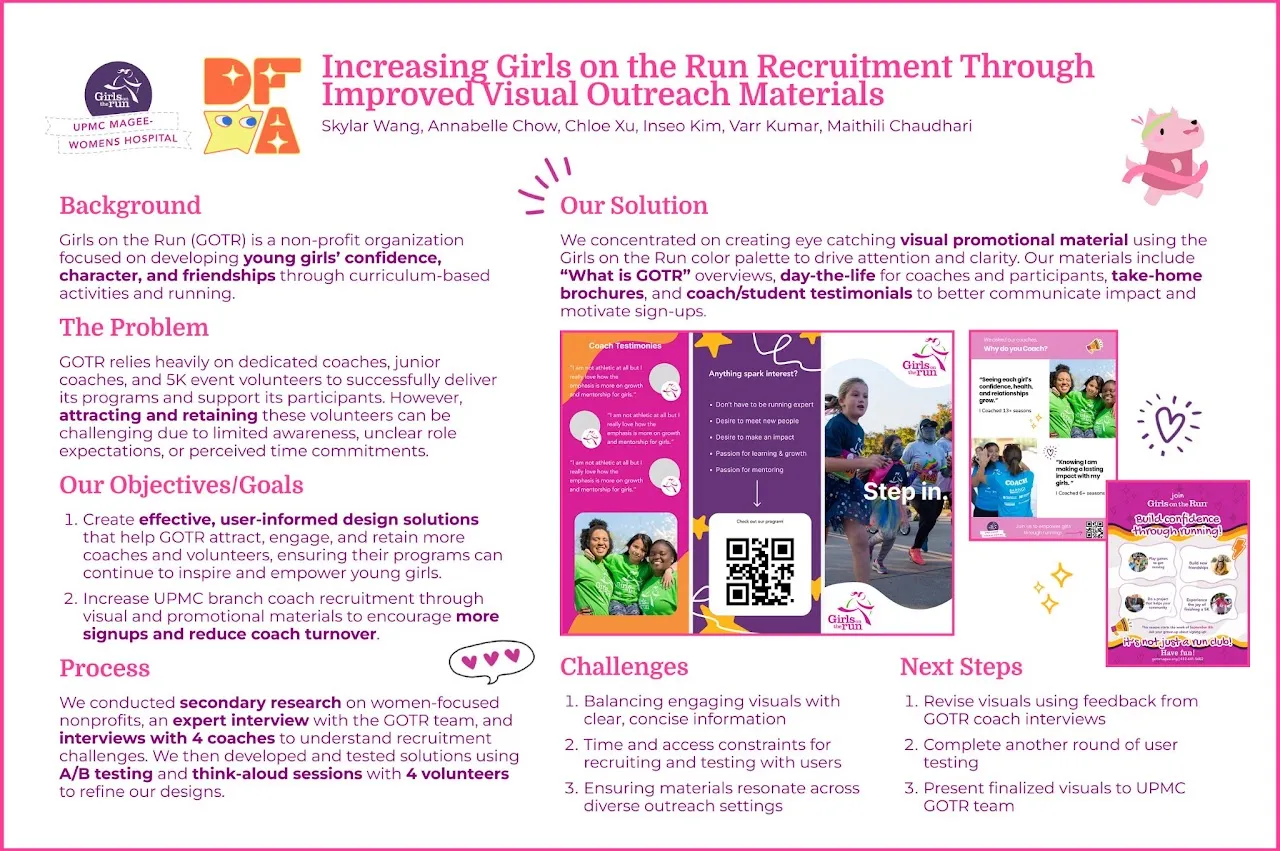
Girls on the Run builds confidence, character, and friendship through curriculum-based activities and running, with volunteer coaches leading small groups of girls. The UPMC Magee-Womens branch, which serves most of Western Pennsylvania, wanted to recruit more coaches and reach more students.
We were a team from Design for America at CMU, led by Skylar Wang and working with the organization for one full school year. The brief was broad: support recruitment and expand reach. We started where you have to: with the coaches who already volunteer.
Thirty past-season coaches answered a survey about what motivated them. Expert interviews with three organizers gave us the recruitment process from the inside: how outreach worked, where it stalled, what coaches needed once they started.
We also mapped the journey of a prospective coach from first contact through their first practice. The map showed something the survey would confirm: people weren't staying away because they'd never heard of Girls on the Run. They were hesitating because they weren't sure they were qualified. No running background required, no coaching experience required. That wasn't visible in the materials. The main questions on the map were: Can I manage the time? Am I prepared to lead a group? What does a coach actually do?
The recruitment pitch led with convenience. The coaches who already said yes were there for the girls.
The survey told us what coaches actually valued. The question was which of those things to put in the headline.
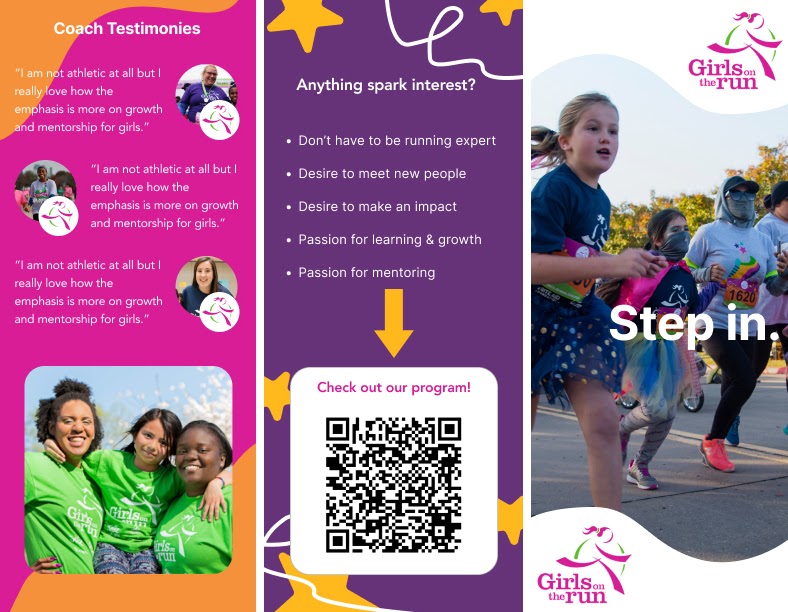
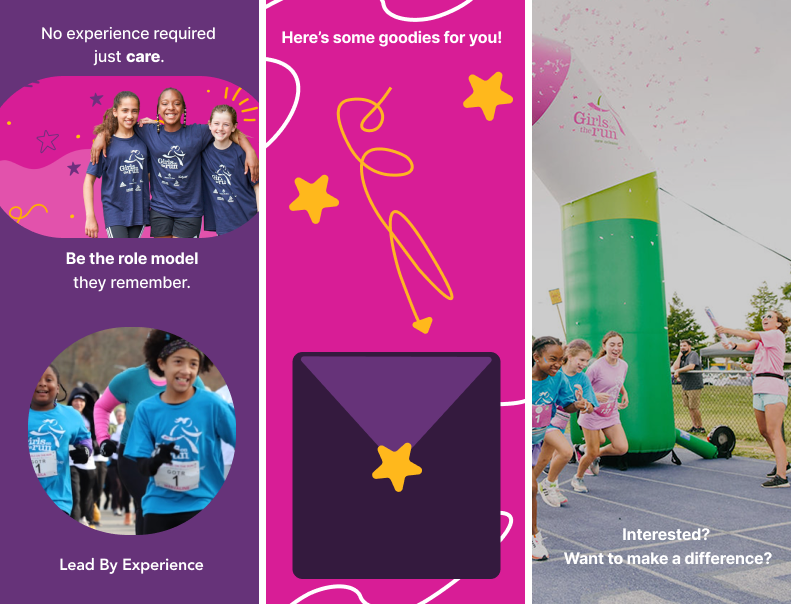
The survey gave us the words. Coaches talked about 'the girls' faces when they accomplished their goals' and 'watching girls evolve and create lasting memories.' That's why they're still volunteering after multiple seasons, and it's the kind of thing that makes someone reading a poster think: I want that. We led with it.
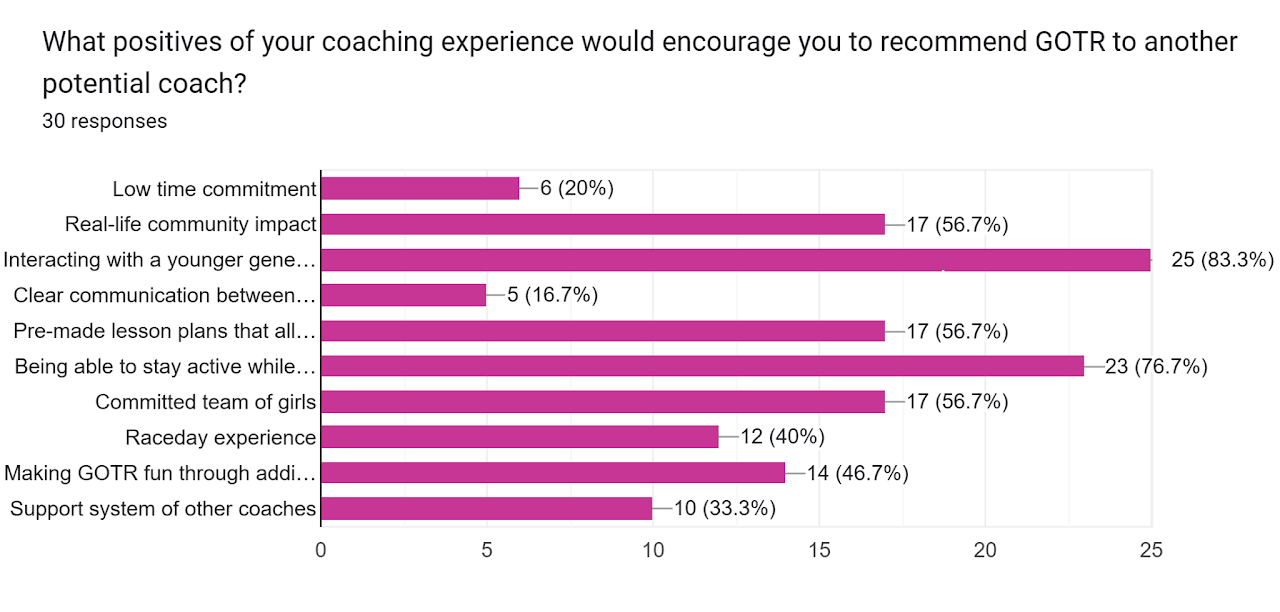
the existing materials led with low commitment. this chart is why we changed it.
Leading with coach experience answered the first question: why would I do this? The journey map showed a second one still open: can I actually do this? People came in curious and left confused. The materials assumed GOTR was understood, but prospects had it wrong. No running background required, no coaching experience required. That wasn't said clearly anywhere.
We designed a Day-in-the-Life format: posters that walk through what a practice looks like, hour by hour, for both a coach and a girl. And we made the low-barrier facts explicit, up front, in plain language. The goal was to let someone read the materials and answer yes to both questions before they ever made contact.
Before finalizing, we A/B tested quotes and images with current and past coaches to check which ones most accurately reflected their own motivations. The goal was to recruit for intrinsic reasons: bring in people who want what current coaches say they're getting, not people who sign up for convenience and leave when it's not convenient enough.
The experience and connection quotes came back as most resonant. The final materials use coaches' language almost verbatim. We also built everything in Canva with editable elements, so GOTR staff could update text and images each season without needing a designer.
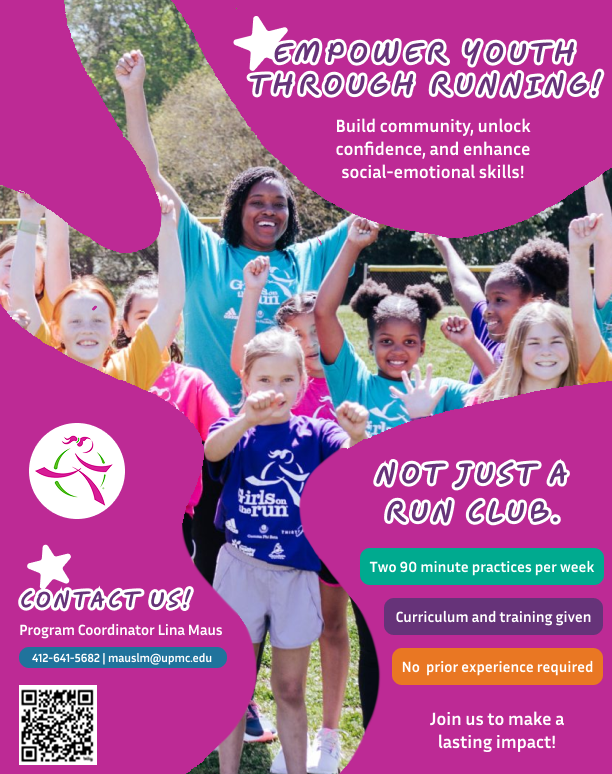
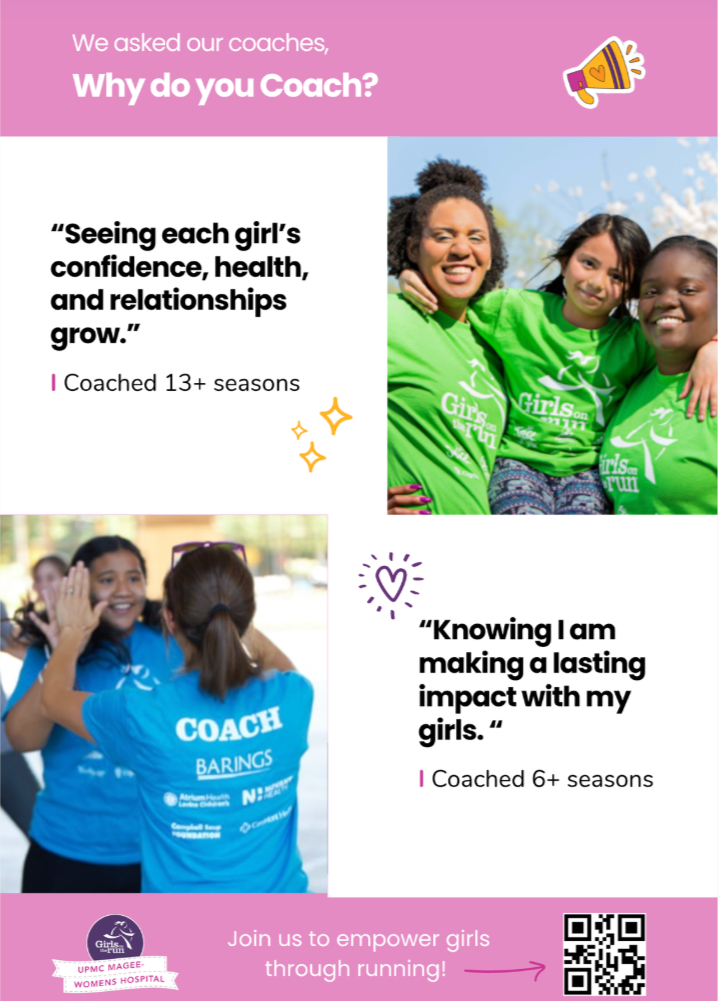
recruitment materials delivered, all editable in Canva
coach survey responses that drove the message
tested with coaches before finalizing quotes and images
The deliverables are in GOTR's hands. Post-launch recruitment numbers haven't been reported yet. The real test is the next recruitment season: does the new message bring in coaches who stay the way current coaches have? That's the question the survey set up, and the season will answer it.
If the data tells you what people actually value, trust it over what sounds like a good headline.